



When Dr. Anal Desai decided to scale Milwaukee Joe’s Ice Cream from 150 gallons per day to 1,000 by February, he faced a challenge that breaks most artisanal brands: how to meet national retail compliance standards without losing small-batch quality. The solution required a $200,000 facility investment, proprietary machinery design, and a complete rethinking of what scaled production means for premium ice cream.
What Makes This Production System Different
Milwaukee Joe’s isn’t buying bigger machines—they’re redesigning how those machines work.
“We’re working with engineers to make our own proprietary machinery where we are somewhere in between the two,” Desai explains. “So we keep the pluses of both sides.”
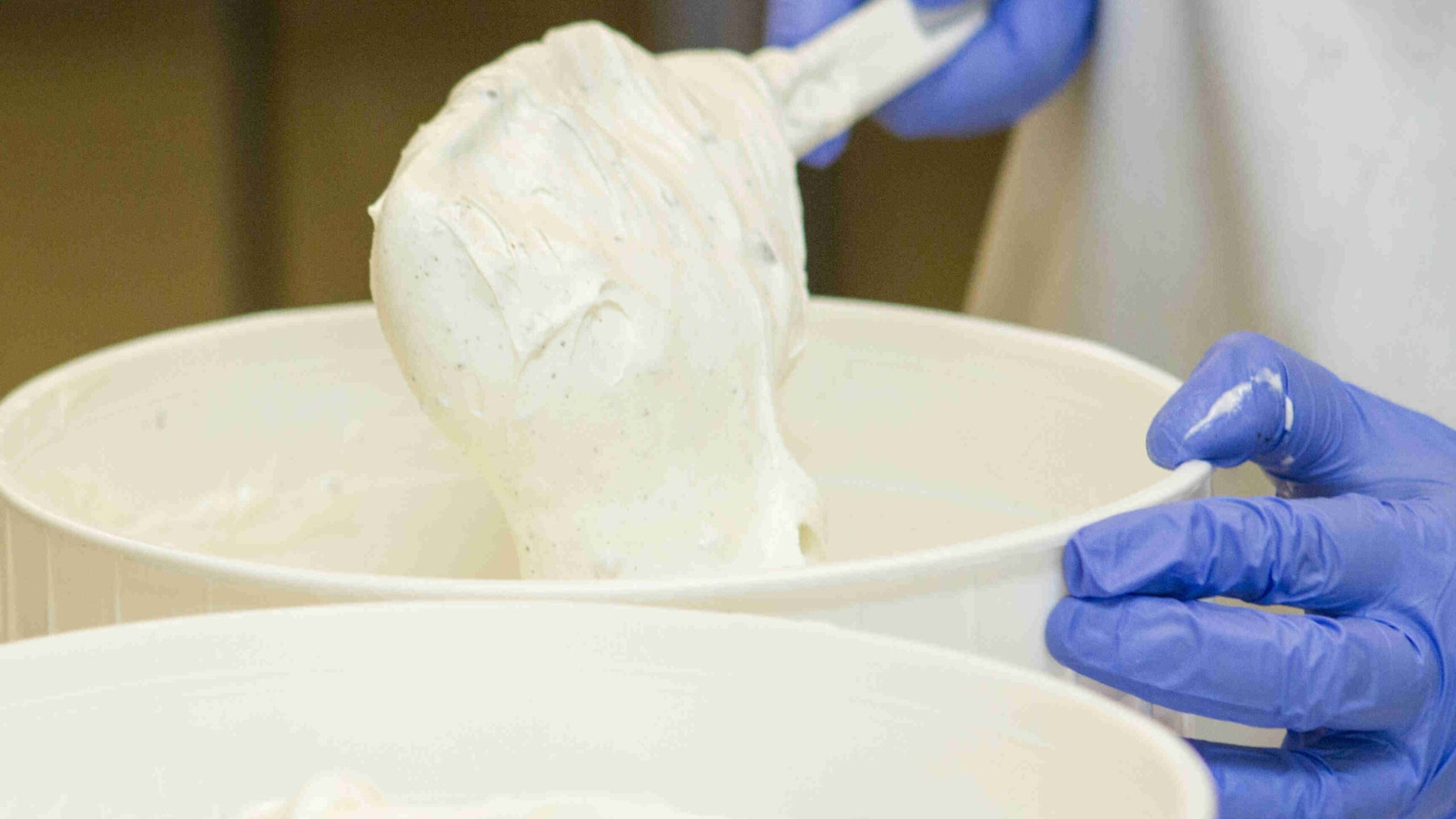
Traditional ice cream manufacturing uses continuous freezer assembly lines that prioritize speed. Small-batch producers use manual churning that prioritizes texture and flavor. Milwaukee Joe’s hybrid system automates only the steps that don’t affect taste: temperature transitions, container filling, and ingredient weighing. The churning process itself—the air incorporation, the timing that creates texture—stays true to small-batch methods.

“Anywhere where we think that the taste affects, which is the incorporation of the air and how much time we are churning, that still happens,” Desai says.
The new 6,500-square-foot facility includes continuous temperature gradient systems that move ice cream through precisely programmed temperature drops without human handling. But it moves at small-batch speed, not assembly-line speed. It’s automation in service of quality, not efficiency at its expense.
Why Compliance and Quality Both Matter
Moving from kitchen to production plant means entering FDA territory: systematic testing protocols, traceability software, and recall procedures. At 150 gallons per day, Milwaukee Joe’s could discard 50 pints if something went wrong. At 1,000 gallons per day, that approach fails.
“We need to know where our strawberry ice cream is going,” Desai explains. “Let’s say somebody from a warehouse in Austin delivers a tub to a restaurant and there’s a problem. I need to make sure that batch number gets recalled from Austin, from San Antonio, and everything in our warehouse.” Every batch must be tracked through software logging every ingredient, every expiration date, every distribution point.
National retailers demand consistency that kitchen operations can’t guarantee. Recipe adjustments that worked at small scale—adding sugar if strawberries aren’t sweet enough—become impossible. “We just cannot do that anymore because that completely changes the recipe, which means we need to get certifications and nutrition labels again,” Desai notes.
For premium brands, maintaining quality through this transition isn’t optional. Customers paying premium prices aren’t just buying ice cream—they’re buying the promise of careful production and natural ingredients. Lose that quality, and the price point becomes indefensible.
How They’re Implementing the System
The implementation starts with team training. Milwaukee Joe’s invested in a three-month onsite program with industry experts to upskill existing staff while hiring food production managers who understand scaled manufacturing.
“We have bought into a program where for the first three months or so, there’s going to be experts in the facility helping them get upscaled,” Desai says.
The FDA compliance system required building traceability into every step. If a recall happens, software traces back to specific ingredient lots: which cream, which milk, which strawberries went into that exact batch. “All of those ingredients sitting in our shelves get put aside for testing,” Desai explains.
Quality control extends beyond the facility. Once pints are loaded onto refrigerated trucks, Milwaukee Joe’s conducts testing at multiple points to ensure proper temperature maintenance.
“Us, the trucking folks, the logistics folks, the warehouse folks, and then the client—everybody falls under a line of QCs,” Desai says.
The company also conducts regular store audits for proper storage and damaged packaging.
The natural ingredients commitment created the biggest implementation challenge. Milwaukee Joe’s is targeting 100% all-natural before FDA regulations mandate it. Finding natural alternatives for signature flavors like Black Raspberry Truffle required months of research.
“There’s just nobody making truffles without preservatives because it’s just not possible,” Desai admits. After extensive consultation, they found partners who could recreate the recipe naturally.
Meeting Standards Without Compromise
Milwaukee Joe’s demonstrates that meeting national retail standards doesn’t require abandoning quality. By automating processes that don’t affect flavor, building robust traceability systems, and investing in team expertise, they’ve created a production model that scales volume without compromising craft. The result exceeds retail standards while maintaining the small-batch values that built the brand.
Ready to taste the difference that quality-focused production makes? Visit Milwaukee Joe’s Ice Cream to explore flavors that prove premium can scale.



Founder & CEO
I founded Milwaukee Joe’s with a simple goal: to share joy through bold, original ice cream flavors. Each recipe is handcrafted from scratch, inspired by my love of global cuisine, seasonal ingredients, and the smiles that follow every scoop.